ANNE ARUNDEL ROADWAY VULNERABILITY ASSESSMENT
ANNE ARUNDEL COUNTY, MD
McCormick Taylor developed a matrix to help the County identify vulnerable road and bridge assets and create a menu of adaptation strategies, along with a clear methodology for applying those strategies to specific assets.
THE CHALLENGE
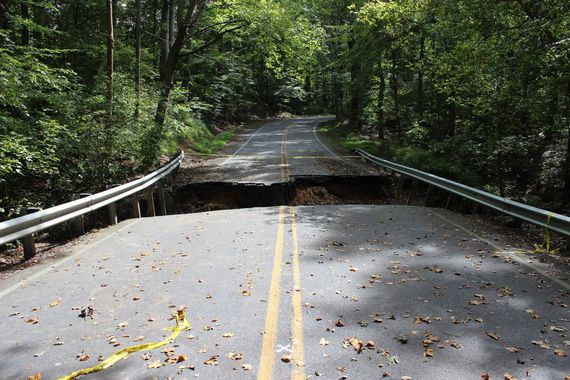
Flooding is one of the most immediate risks posed by climate change, particularly to transportation infrastructure. Even minor flooding can make roads and bridges impassable, increasing the risk of vehicle accidents, slowing emergency response, and cutting off access to critical community resources like schools and hospitals. Over time, repeated inundation also reduces the lifespan of roadway assets, increasing maintenance costs.
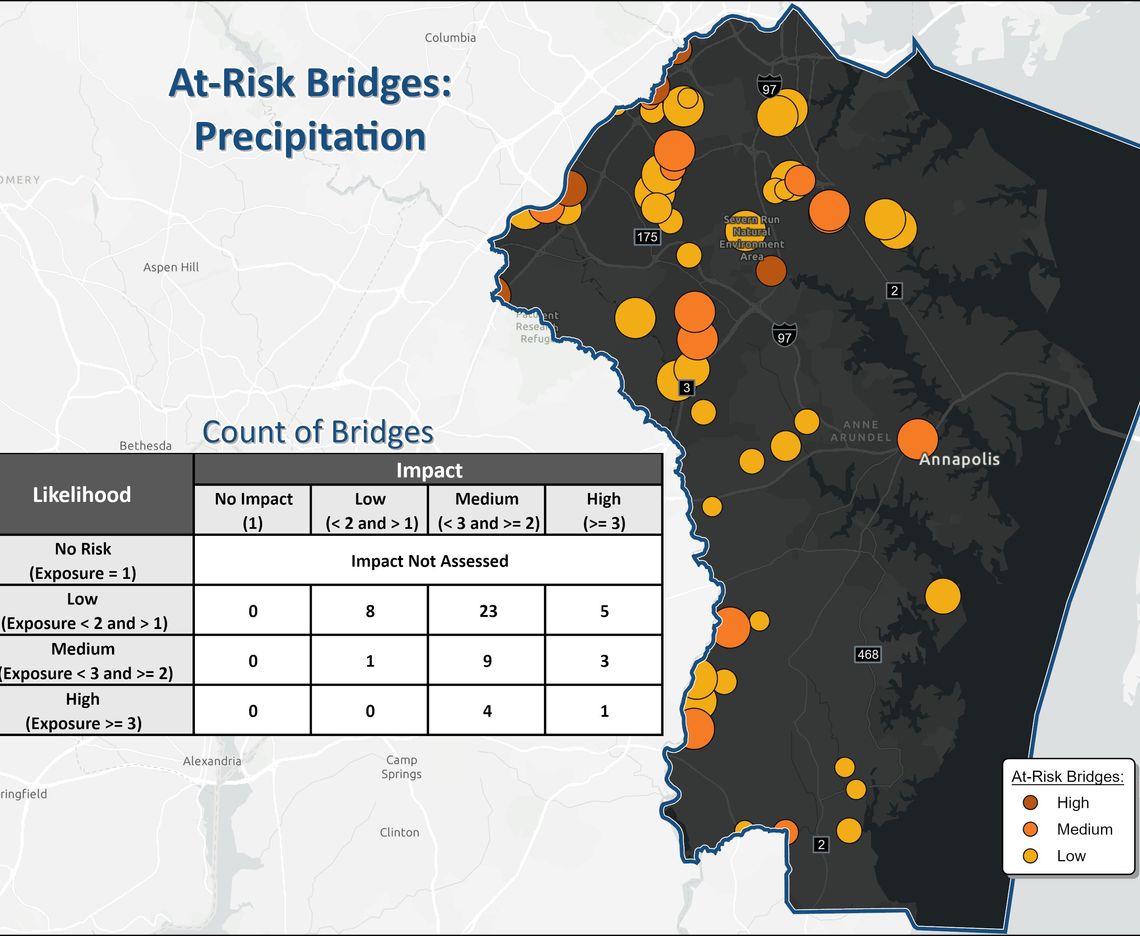
To proactively address these risks, the Anne Arundel County Department of Public Works sought to evaluate the vulnerability of its 1,800 miles of county-maintained roads and 86 National Bridge Inspection Standards (NBIS) bridges to three climate stressors: sea level rise, storm surge, and precipitation change. The project was funded through a FEMA Building Resilient Infrastructure and Communities (BRIC) grant and aimed to equip the county with data-driven strategies to mitigate climate impacts and plan for long-term asset maintenance.
HOW WE HELPED
The primary objectives of the project were to identify vulnerable road and bridge assets and to develop a menu of adaptation strategies, including a methodology for applying those strategies to specific assets.
From the outset, the team recognized this effort as a continuation of previous climate resilience work, including MDOT SHA’s 2014 and 2019 studies and the County’s 2023 Sea Level Rise Resiliency Study. While those earlier studies provided a foundation, the team refined and expanded upon the methodologies to better align with the County Department of Public Works’ specific goals and decision-making needs. Key departures from previous approaches included:
-
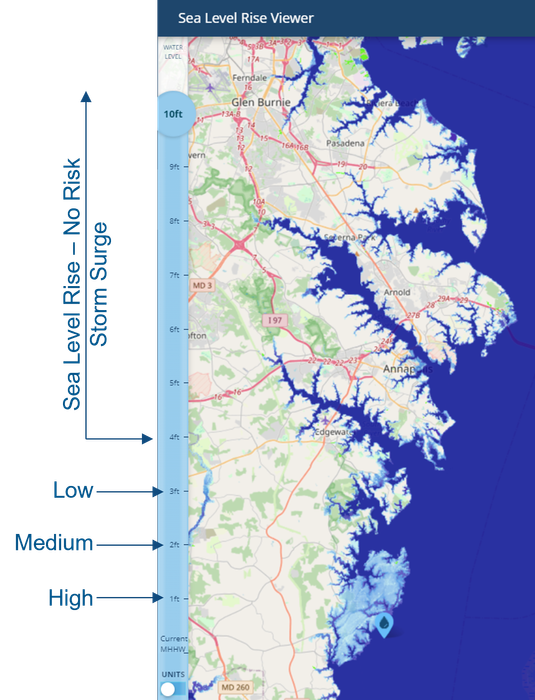
Leveraging existing data sources rather than modeling new sea level rise, storm surge, or precipitation change scenarios,
-
Evaluating sea level rise impacts independently of fixed time horizons, and
-
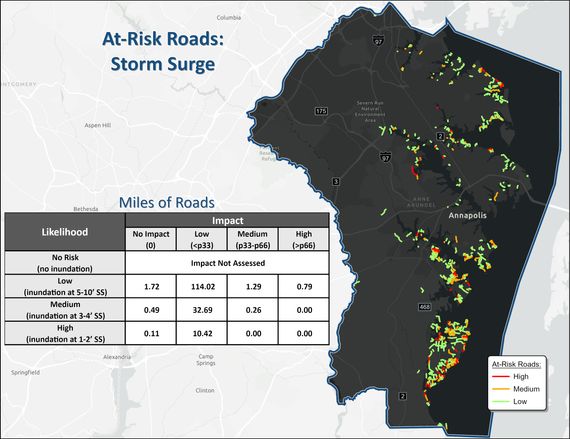
Moving away from a single composite vulnerability score toward a 2D matrix that considers both the likelihood of inundation and the systemic impact of asset closures.
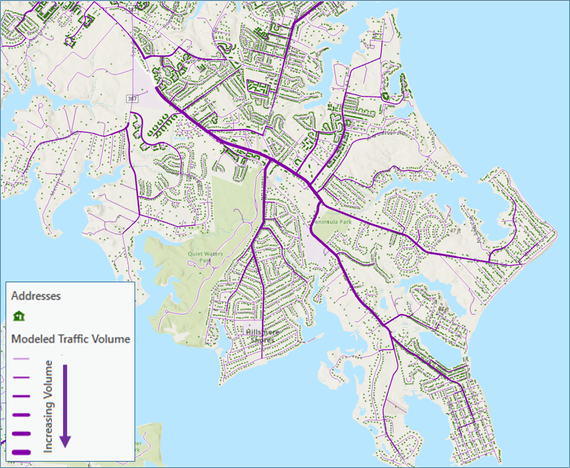
To implement this updated approach, McCormick Taylor’s GIS team worked closely with County staff to develop a GIS model that categorized each roadway asset as low, medium, or high across both dimensions. The inundation analysis drew on existing NOAA sea level rise models, FEMA floodplain data, and the County’s documented flood events. For the impact component, the team used ArcGIS’s Network Analyst to conduct two types of detour analyses, quantifying how road or bridge closures would affect mobility and access across the broader network.
RESULTS
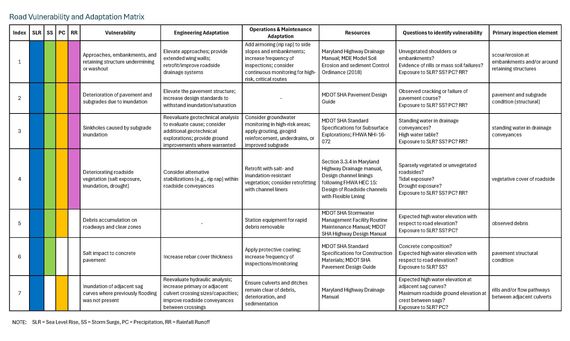
Following the completion of the GIS analysis, a McCormick Taylor hydraulic engineer developed a menu of adaptation options tailored to the types of vulnerabilities identified. This guidance is organized by asset type, stressor, and vulnerability, and includes screening questions, field inspection tips, potential engineering and maintenance adaptations, and links to relevant local, state, and federal resources. While the adaptation tables are not intended to provide cost estimates or prioritization criteria, they offer a flexible framework for evaluating and addressing vulnerabilities on a case-by-case basis.
Throughout the project, the team collaborated with an internal stakeholder group representing multiple County departments to validate the methodology and results. A dedicated project website provided regular updates to the public, and the findings were presented during a virtual public meeting in May 2025.
The final deliverables included a vulnerability assessment, GIS datasets, an adaptation strategy framework, and a prioritization tool that helps the County balance asset-specific risks with broader transportation system impacts—providing a strong foundation for future resilience planning and capital investment.